
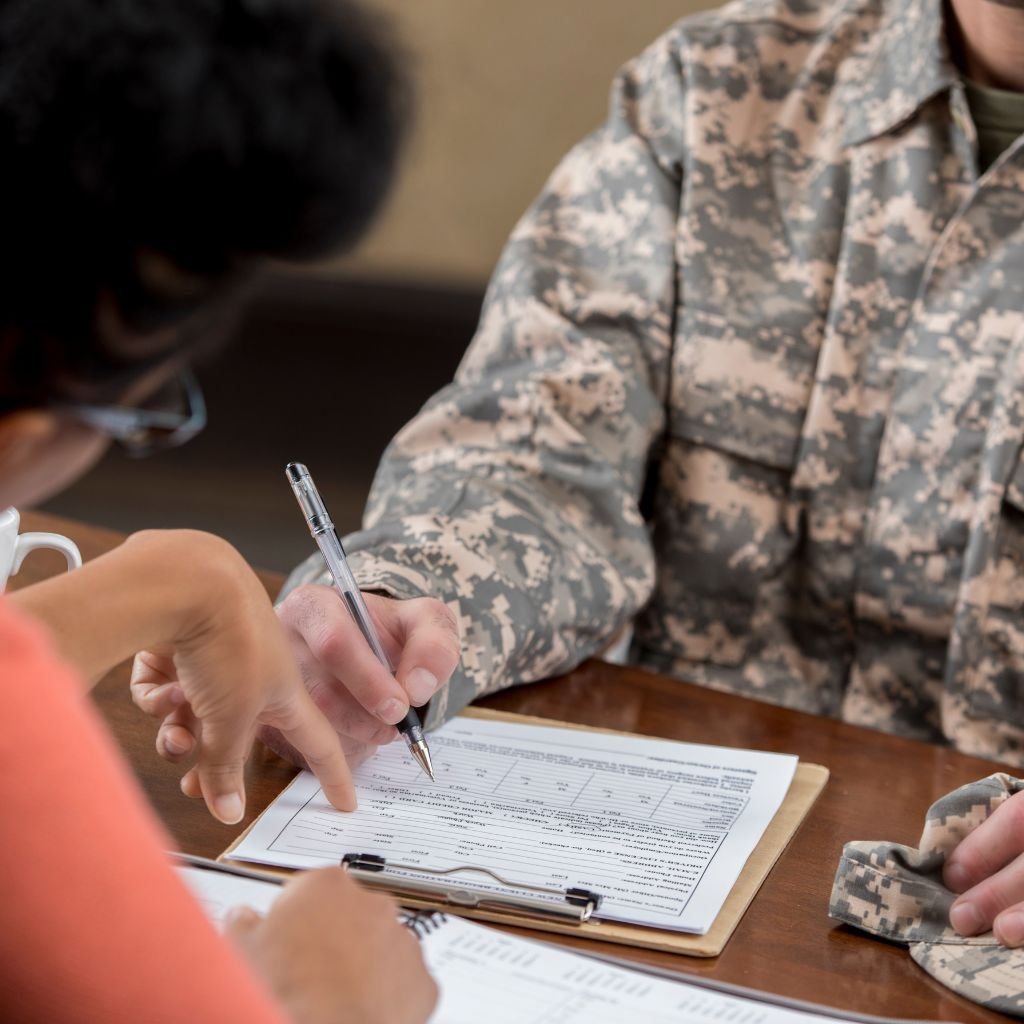
A DD214 is only one part of a Veteran's military record.
Depending on what you need, you may be looking for a separation document, complete personnel file, duty assignments, awards and decorations, training information, medical records, or another document created during military service.
Many of these records can be requested through the National Archives and National Personnel Records Center, but not every military record is stored in the same place.
The Veteran's branch, service status, separation date, and type of record all help determine which agency currently maintains the information.
What Military Service Records Can You Request?
Military personnel records can contain considerably more information than a DD214.
Depending on the Veteran and the records available, military service records may include information about:
Discharge and separation documents, dates of service, character of discharge, duty stations and assignments, military occupations, qualifications, training, awards and decorations, promotions, administrative records, and certain medical or health information.
Many of these documents are maintained within a Veteran's Official Military Personnel File, or OMPF.
If you need more than a DD214, read How to Get Your Complete Military Personnel File .
OFFICIAL VA RESOURCE
VA explains that military service records can include discharge information, duty assignments, medals and decorations, qualifications, certificates, and medical and health records.
Review VA military service records guidance →Who Can Request Military Service Records?
For military personnel records that are less than 62 years old, access is restricted by federal privacy rules.
A Veteran can generally request their own records.
An authorized representative may also request specified information when the Veteran provides appropriate signed authorization.
When the Veteran has died, qualifying next of kin can request non-archival military personnel records.
The National Archives defines next of kin for this purpose as:
An un-remarried surviving spouse, son, daughter, father, mother, brother, or sister.
Members of the general public may have more limited access to recent non-archival personnel records.
For a detailed explanation, read Who Can Legally Request a Veteran's Military Records? .
OFFICIAL NATIONAL ARCHIVES RESOURCE
The National Archives explains access rights for Veterans, qualifying next of kin, authorized representatives, and members of the general public.
Review military personnel record access rules →Step 1: Decide Which Military Record You Need
Before submitting anything, determine what you actually need.
Someone applying for a VA home loan may only need a discharge or separation record. Someone researching an entire military career may need the Veteran's complete personnel file. Another Veteran may only be trying to document an award or duty assignment.
Requesting the specific information you need can make the purpose of the request clearer.
If the only document you need is your separation record, use our How to Get a DD214 Online guide.
Step 2: Identify the Veteran's Branch and Separation Date
Military records are not maintained in one universal repository.
The branch of service and separation date help determine which records system or agency is likely to hold the file.
The National Personnel Records Center maintains large collections of military personnel records for former service members, but newer records may still be held by the Department of Defense or the individual service branch.
Active military, inactive Reserve, and current National Guard personnel records are not maintained by NPRC in the same manner as records of former service members.
For a deeper explanation of record custody, read Where Are Military Records Stored? .
Step 3: Check Whether Your Records Are Available Through milConnect
Some Veterans with more recent military service may be able to request records through the Department of Defense's milConnect system.
VA currently directs Veterans to milConnect under these general separation-date thresholds:
Air Force: discharged after October 1, 2004
Army: discharged after October 1, 2002
Marine Corps: discharged after January 1, 1999
Navy: discharged after January 1, 1995
VA also notes that certain Marine Corps records from 1998 to the present and Coast Guard records from 2008 to the present may need to be requested through the appropriate personnel command.
If records are not available through milConnect, that does not mean they are missing. Another government records custodian may maintain them.
Step 4: Gather the Information Needed to Locate the Record
The National Archives needs enough identifying information to locate the correct military file.
Important information includes:
The Veteran's complete name used during service, service number, Social Security number when applicable, branch of service, dates of service, and date and place of birth.
You should provide as much accurate information as possible.
If you do not know your service number, that does not necessarily prevent a request. Other identifying information may still allow the records custodian to locate the correct file.
Read What Information Do I Need to Request a DD214? for a request checklist.
If the service number is specifically the issue, see How to Get a DD214 Without a Service Number .
Step 5: Request the Records Online Through eVetRecs
Veterans and qualifying next of kin can request many military personnel records online through the National Archives' eVetRecs system.
The system asks who is making the request, collects identifying and military service information, and allows the requester to identify the records being sought.
NARA currently requires users to verify their identity through ID.me when submitting new eVetRecs requests and when retrieving electronic responses.
When possible, NARA provides the response electronically.
An online request does not necessarily mean the record is instantly available. Some files still require manual research and processing.
OFFICIAL NATIONAL ARCHIVES RESOURCE
NARA's eVetRecs guidance explains how Veterans and next of kin can submit military personnel record requests online and complete the current ID.me verification process.
View official eVetRecs instructions →Step 6: Request Records Using Standard Form 180
Military records can also be requested using Standard Form 180, Request Pertaining to Military Records.
The form can be submitted to the appropriate records custodian by mail or fax.
NARA recommends SF-180 because the form collects the basic information needed to locate and process a military records request.
The form includes a Records Location Table that helps determine where the request should be sent based on service branch, status, and separation date.
Make sure you use the current routing information rather than sending every military records request automatically to the same address.
OFFICIAL NATIONAL ARCHIVES RESOURCE
NARA provides Standard Form 180 and the current records-location instructions for requesting military personnel records by mail or fax.
View Standard Form 180 and instructions →What If You Are Requesting Records for a Deceased Veteran?
Qualifying next of kin can request a deceased Veteran's non-archival military personnel records.
The request must include acceptable proof that the Veteran has died.
The National Archives accepts documentation such as:
A death certificate, a letter from a funeral home, or a published obituary.
The requester must also identify their relationship to the Veteran.
For the full process, read How to Get a DD214 for a Deceased Veteran .
What If You Are Helping a Living Veteran?
A family relationship by itself does not automatically provide unrestricted access to a living Veteran's non-archival military personnel file.
A living Veteran can request their own records or provide signed authorization allowing another person to receive specified information.
The authorization should identify what information or copies may be released and should include the Veteran's signature.
This commonly applies when a spouse or adult child is helping a Veteran manage records.
See How to Get a DD214 for a Parent or Can a Spouse Request a DD214? for more information.
What If You Want the Veteran's Complete Personnel File?
A DD214 summarizes a period of qualifying active military service, but it is not the Veteran's entire personnel record.
Someone researching assignments, promotions, military education, awards, administrative actions, or other details may need information from the Official Military Personnel File.
What is contained in an OMPF varies by service member and period of service.
Read How to Get Your Complete Military Personnel File if the DD214 alone will not provide what you need.
What If You Need Replacement Medals or Awards?
Requests for replacement medals and decorations follow their own procedures.
The National Archives specifically advises requesters not to use the normal SF-180 record-request addresses for issuance or replacement of medals and awards.
Medal requests are routed according to the Veteran's branch of service and eligibility.
Read How to Get Replacement Military Medals before submitting that type of request.
What About National Guard Records?
National Guard records can follow a different path from records of federal active-duty military service.
A National Guard member may have an NGB Form 22 documenting separation from the National Guard rather than relying solely on a DD214.
A Guard member who also completed qualifying federal active-duty service may have both types of records.
Learn more in What Is an NGB Form 22? and DD214 vs NGB Form 22 .
What Happens When Military Records Become Archival?
Military personnel files generally become archival 62 years after the service member separates from military service.
Records less than 62 years old remain subject to federal privacy restrictions.
Once an OMPF becomes archival, it is generally open to the public and can be ordered by anyone.
Archival personnel files are subject to National Archives copying fees, and a Veteran or family relationship is no longer required simply to request the archival file.
OFFICIAL NATIONAL ARCHIVES RESOURCE
NARA explains the 62-year rule separating federal non-archival military personnel records from archival records that are open to public request.
Review archival military personnel record rules →What If the Military Records Were Lost or Destroyed?
Some older Army and Air Force personnel records were affected by the July 12, 1973 fire at the National Personnel Records Center in St. Louis.
NARA estimates that approximately 16 to 18 million Official Military Personnel Files were destroyed.
The most heavily affected records included Army personnel discharged between November 1, 1912 and January 1, 1960 and certain Air Force personnel discharged between September 25, 1947 and January 1, 1964.
A destroyed primary personnel file does not necessarily mean military service can no longer be documented.
NPRC has accumulated auxiliary records that can be used to reconstruct basic military service information in many cases.
If you believe the Veteran's records were affected, read How to Get a DD214 if Military Records Were Lost .
How Long Does a Military Records Request Take?
There is no universal processing time.
The National Archives says response times depend on the complexity of the request, availability of the records, and current workload.
NPRC currently receives approximately 4,000 to 5,000 requests each day.
NARA currently advises requesters not to submit a follow-up request before 90 days have elapsed because duplicate inquiries can cause additional delays.
That does not mean every request takes 90 days. Some records may be available sooner, while requests involving extensive searches or reconstruction can take longer.
Read How Long Does It Take to Get a DD214? for more information about processing times.
Can You Get Military Records Immediately?
Sometimes electronic records may be available quickly, but there is no universal instant-access system for every Veteran and every military record.
Many historical personnel records are physical files that must be located and processed.
Certain emergency situations follow separate procedures, particularly urgent burial requests and some natural-disaster requests.
If timing is the main concern, read Can I Get My DD214 Immediately? .
Do You Need to Request Records Before Applying for VA Benefits?
Not necessarily.
VA currently states that if you submit an application for VA benefits, VA will request your DD214 when it receives the application.
Veterans therefore generally do not need to delay a VA benefits application solely to obtain a DD214 from the National Archives first.
That guidance specifically addresses the DD214 needed for the VA benefits application. You may still want your own military records for personal use or for other programs.
How Much Does It Cost to Request Military Service Records?
Most Veterans and qualifying next of kin can obtain basic information from federal non-archival military personnel records without a government fee.
Fees can apply to archival records and certain extensive requests.
Private records-request companies may also charge separately for assistance preparing and routing a request.
For DD214-specific costs, read How Much Does It Cost to Get a DD214? .
How to Request Military Service Records: The Short Version
The process generally comes down to the following:
1. Determine exactly which record or information you need.
2. Identify the Veteran's branch of service and separation date.
3. Determine who currently maintains the record.
4. Gather accurate identifying and military service information.
5. Check whether newer records are available through milConnect.
6. Use eVetRecs or Standard Form 180 when the National Archives is
the appropriate records source.
7. Include authorization or proof of death when required.
8. Allow the appropriate records custodian time to locate and process
the request.
The key is identifying the record you need and the agency that actually maintains it before submitting the request.
Need Help Preparing a Military Records Request?
GetMyDD214.com helps Veterans and eligible family members prepare and route military records requests when a DD214 or other service record needs to be located.
Start My DD214 RequestGetMyDD214.com is a private paid service and is not affiliated with the Department of Veterans Affairs, Department of Defense, or National Archives. Veterans and eligible family members may also request basic non-archival military records directly from the appropriate government agency, generally at no cost.