
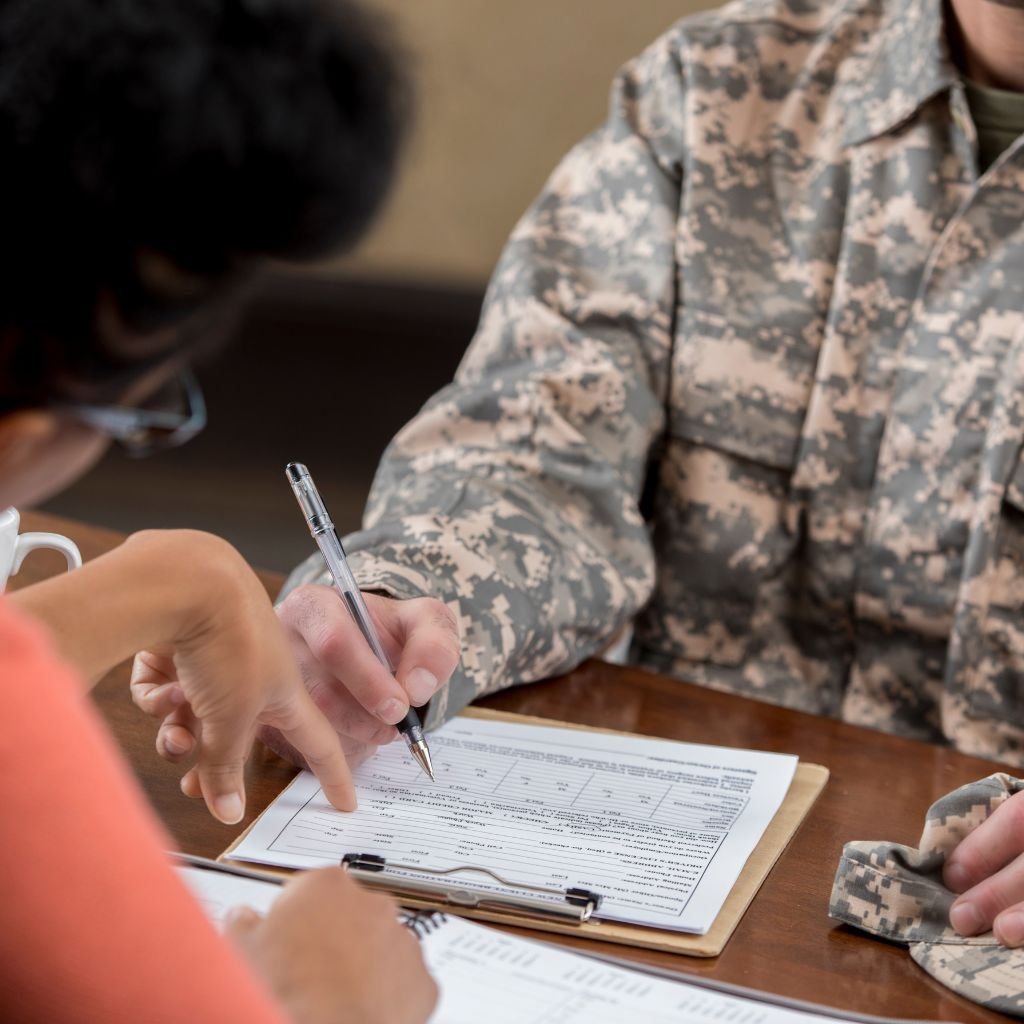
If you submitted a DD214 request and weeks have passed without the record arriving, it is reasonable to wonder whether the request was lost, ignored, or submitted incorrectly.
In many cases, the explanation is less dramatic.
The National Archives says military-record response times depend on:
The complexity of the request, availability of the record, and current workload.
The National Personnel Records Center currently receives approximately 4,000 to 5,000 requests every day.
Some requests involve a readily accessible electronic record. Others require staff to locate older files, transfer requests to another records custodian, research incomplete service information, or reconstruct military service using alternate records.
Those requests will not necessarily move at the same speed.
CURRENT NATIONAL ARCHIVES GUIDANCE
NARA states that NPRC processing times vary according to request complexity, record availability, and workload and that the center receives approximately 4,000 to 5,000 requests each day.
Review current military records guidance →How Long Should a DD214 Request Take?
There is no single guaranteed turnaround time for every DD214 request.
The National Archives no longer presents one universal processing estimate that applies to every military personnel record.
Instead, NARA explains that response time varies according to the individual request.
One Veteran's record may be available through a modern electronic personnel system while another Veteran's record may need to be physically located or reconstructed from documents created decades ago.
For general processing expectations rather than troubleshooting, read How Long Does It Take to Get a DD214? .
1. NPRC Handles Thousands of Requests Every Day
Government workload is one of the basic reasons a DD214 request may not be completed immediately.
The National Archives currently states that NPRC receives roughly:
4,000 to 5,000 military-record requests per day.
Those requests can range from straightforward DD214 copies to complex searches involving entire personnel files, historical records, deceased Veterans, medical documentation, fire-damaged records, and other military information.
Your request therefore enters a large federal records-processing operation rather than an automated system that simply retrieves every DD214 from one database.
2. Your DD214 May Not Be Stored Where You Think It Is
Military personnel records are distributed across different government records systems.
The correct custodian can depend on:
Branch of service
Separation date
Active-duty, Reserve, or National Guard status
Whether the Veteran is retired
Age of the record
Type of military document being requested
Although NPRC services a large number of former-service records, some newer personnel files remain under the custody of the applicable military service or personnel command.
If the request must be routed or referred to another organization, additional time can be required.
For a detailed explanation, read Where Are Military Records Stored? .
OFFICIAL RECORD LOCATION GUIDE
NARA maintains a detailed records-location table showing how military personnel record custody varies by branch, service status, and separation date.
Review military record locations →3. More Recent Records May Be in a Different Personnel System
Veterans with relatively recent military service should not assume their only option is waiting for a historical-record search through NPRC.
VA currently directs certain Veterans to the Department of Defense's milConnect system when they were discharged after these dates:
Air Force: after October 1, 2004
Army: after October 1, 2002
Marine Corps: after January 1, 1999
Navy: after January 1, 1995
VA also currently states that Marine Corps records from 1998 to the present and Coast Guard records from 2008 to the present may need to be obtained through the appropriate personnel command.
NARA can accept some of these requests and forward them to the appropriate personnel organization, but that referral introduces another step in the process.
OFFICIAL VA MILITARY RECORDS GUIDANCE
VA explains when Veterans may be able to retrieve records through milConnect and when recent records may still be maintained by a service personnel command.
Review current VA records guidance →4. The Request May Not Contain Enough Identifying Information
A records specialist needs enough information to identify the correct Veteran and locate the appropriate military personnel file.
Useful information includes:
Complete name used during military service
Branch of service
Dates of service
Date and place of birth
Service number, if known
Social Security number, when applicable
DoD identifier, when known
Last duty station, when known
Not knowing every item does not automatically prevent a DD214 request.
But when several identifiers are missing or conflicting, the search can become more complicated.
If you are unsure whether your request included enough information, review What Information Do I Need to Request a DD214? .
5. Your Name May Have Changed Since Military Service
Personnel records are generally indexed using identifying information associated with the service member at the time the records were created.
A later name change because of marriage, divorce, adoption, or another legal event can make accurate historical information particularly important.
If your current name differs from the name used during military service, make sure the records request identifies the name under which you served.
6. Your Service History May Include Multiple Components
Some Veterans have relatively straightforward military histories.
Others served through combinations of:
Active duty
Reserve service
Army National Guard
Air National Guard
Multiple branches
Multiple enlistments or periods of activation
Those service periods can create more than one personnel record or separation document.
A National Guard member, for example, may have one or more DD214s from qualifying active-service periods and an NGB Form 22 documenting separation from the Guard.
If the request does not clearly identify which service period or document is needed, additional research can be necessary.
Guard members can review DD214 vs NGB Form 22 .
7. You May Have Requested More Than Just the DD214
Request complexity matters.
A request for one specific separation document is different from a request for:
A complete Official Military Personnel File, medical records, personnel history, award verification, multiple service periods, or extensive archival documentation.
A broader request can require substantially more records review than locating one DD214.
If you intentionally requested the complete personnel file, read How to Get Your Complete Military Personnel File for an explanation of what that process involves.
8. The Veteran's Records May Be Very Old
Older military records can require more extensive search efforts.
NARA specifically notes that older records requiring extensive searches may take longer to complete.
Historical records may exist as physical files rather than records immediately retrievable from a modern electronic personnel system.
Some very old military records are also maintained in different National Archives facilities from modern personnel files.
9. The Veteran's File May Have Been Affected by the 1973 NPRC Fire
This is one of the most significant causes of complicated searches for certain older Army and Air Force Veterans.
On July 12, 1973, a fire at the National Personnel Records Center destroyed approximately 16 to 18 million Official Military Personnel Files.
The records most heavily affected were:
Army personnel discharged November 1, 1912 through January 1,
1960 — approximately 80% affected.
Air Force personnel discharged September 25, 1947 through January 1,
1964 whose names alphabetically followed Hubbard, James E. —
approximately 75% affected.
The loss of the primary personnel file does not necessarily mean the Veteran's service can no longer be documented.
NPRC has collected alternate and auxiliary records that can often be used to reconstruct basic service information.
But reconstruction can require additional research.
OFFICIAL NPRC FIRE RESOURCE
NARA explains which military personnel records were affected by the 1973 NPRC fire and how auxiliary records may be used to reconstruct service information.
Review the 1973 NPRC fire records →10. Reconstructing a Destroyed Record Can Require Other Agencies
Fire-related record reconstruction does not always happen entirely within one NPRC collection.
NARA states that sometimes alternate records already in its holdings allow staff to reconstruct service promptly.
In other cases, NPRC must request information from other agencies before the service can be reconstructed.
Those additional research steps can extend the processing time.
If you believe this is affecting your request, read How to Get a DD214 if Military Records Were Lost .
11. A Family Request May Require Additional Documentation
Requests involving a deceased Veteran can require information that is not necessary when the Veteran requests their own record.
Qualifying next of kin requesting non-archival records generally need to establish that the Veteran has died.
Acceptable evidence can include documentation such as:
A death certificate, funeral-home letter, published obituary, or other proof accepted by NARA.
If required documentation is missing, additional correspondence may be needed before the requested information can be released.
Families should review How to Get a DD214 for a Deceased Veteran .
12. You May Not Be Authorized to Receive the Full Record
Federal privacy restrictions apply to recent non-archival military personnel records.
A Veteran can generally request their own records, while another person requesting records for a living Veteran may need appropriate authorization.
A family relationship alone does not automatically provide unrestricted access to a living Veteran's personnel file.
If the records custodian needs authorization before releasing protected information, the request cannot simply be treated as an unrestricted public-record search.
For the complete rules, read Who Can Legally Request a Veteran's Military Records? .
13. Duplicate Requests Can Make the Problem Worse
This is one of the easiest mistakes to avoid.
If you become concerned that your DD214 is taking too long, repeatedly submitting new requests may seem like a reasonable way to make sure one reaches NPRC.
NARA specifically advises against doing this.
Current guidance says:
Do not send a follow-up request before 90 days have elapsed because doing so may cause further delays.
A duplicate submission can create additional work and confusion rather than moving the existing request to the front of the line.
CURRENT NPRC FOLLOW-UP GUIDANCE
NPRC asks requesters not to submit follow-up requests before 90 days have elapsed because duplicate inquiries may contribute to further delays.
Review current NPRC processing guidance →Does That Mean You Can't Check the Status for 90 Days?
Not exactly.
NARA's current OMPF status guidance says to allow approximately 10 days for NPRC to receive and initiate processing of a request before using its Online Status Update Request system.
Separately, NARA's general military-record processing guidance asks requesters not to send a follow-up request before 90 days because duplicate inquiries can cause additional delays.
The practical distinction is:
Checking the status of an existing request is different from repeatedly submitting another request for the same records.
If you simply want to know whether an existing NPRC request is in the system, use the official status process rather than filing a duplicate DD214 request.
How Do I Check the Status of My DD214 Request?
If you submitted the request through the National Personnel Records Center, NARA provides an Online Status Update Request process.
NARA currently recommends allowing about 10 days for the original request to be received and initiated before checking status.
If you have the request number, keep it available.
NARA's status system is intended for existing NPRC requests, not for starting a new military-record request.
OFFICIAL NPRC STATUS GUIDANCE
NARA provides an online process for checking an existing NPRC military-record request and currently recommends allowing about 10 days for intake before checking status.
Review NPRC request-status instructions →Can You Call NPRC About a Delayed Request?
Yes.
NARA currently lists NPRC Customer Service at:
314-801-0800
NARA states that representatives are generally available from 8:00 a.m. to 4:00 p.m. Central Time.
The busiest calling period is typically weekdays between approximately 10:00 a.m. and 3:00 p.m. Central Time.
A phone call can help clarify the status of an existing request, but calling does not cause a routine record to bypass the government's normal processing requirements.
Will Sending Another SF-180 Speed Things Up?
Usually not.
If NPRC already has a valid request, submitting another SF-180 for the same DD214 can create a duplicate.
Before filing again, determine whether:
The original request was received;
the original request was routed correctly;
NPRC asked for additional information; or
the request actually belongs with another records custodian.
Use the status process first when an existing request is already pending.
Will Express Shipping Make NPRC Process My DD214 Faster?
No.
Paying to send a paper request by Priority Mail, FedEx, UPS, or another expedited carrier can make the envelope arrive at the records facility sooner.
It does not make the government retrieve and process the personnel record faster once it arrives.
If the need has become genuinely urgent, use the government's emergency-request procedure rather than assuming overnight delivery will create expedited processing.
What If My Situation Has Become an Emergency?
A request that began as routine can sometimes become time-sensitive.
NARA maintains a specific Emergency Request procedure for situations such as:
An upcoming surgery or funeral.
Emergency requests should be identified through NARA's official emergency procedure rather than by repeatedly submitting routine requests.
For the emergency process, read Can I Get My DD214 Immediately? .
OFFICIAL EMERGENCY REQUEST GUIDANCE
NARA provides priority procedures for genuine emergency military record needs, including upcoming surgery, funeral arrangements, and certain natural-disaster requests.
Review emergency military-record procedures →What If I Need My DD214 for VA Benefits?
Do not automatically hold up a VA benefits application because an NPRC request is still pending.
VA currently states that when it receives an application for VA benefits, VA will request the Veteran's DD214 as part of the application process.
You therefore generally do not need to wait for your personal National Archives copy before submitting a VA benefits application solely for VA's use.
Read Why You Need a DD214 for VA Benefits .
What If I Need My DD214 for a VA Home Loan?
A VA home-loan Certificate of Eligibility can create a more time-sensitive documentation issue.
Separated Veterans may need discharge or separation records when establishing eligibility.
If a home purchase is approaching underwriting or closing, determine what documentation VA or the lender actually needs rather than assuming an ordinary NPRC request is the only possible route.
Read How to Use a DD214 for a VA Home Loan .
What If I Never Actually Had a DD214?
A request can also appear to be "taking forever" when the document being requested may never have existed for that particular period of service.
Not every form of military service automatically results in a DD214.
Depending on when and how the individual served, another separation document may have been issued instead.
National Guard service can also generate NGB records that are different from a DD214.
If you are not sure whether a DD214 was ever issued, read What Happens If I Never Received My DD214? .
What If I Submitted the Wrong Request?
Make sure the document you requested actually matches what you need.
For example:
DD214 = qualifying separation or active-service record.
NGB Form 22 = National Guard separation and record of service.
Official Military Personnel File = broader administrative personnel record.
DD215 or corrected/reissued DD214 = correction-related documentation.
Asking the wrong agency for the wrong record can add unnecessary routing and research.
What If My Service Number Was Missing?
A missing service number does not automatically prevent NPRC from locating a military record.
The current SF-180 specifically allows a requester to indicate that the service number is unknown.
Other identifying information can still be used.
But the fewer reliable identifiers available, the more difficult the search can become.
Read How to Get a DD214 Without a Service Number if this applies to your request.
Can a Private Service Make NPRC Process the Request Faster?
No private company controls National Archives processing.
A private records-request assistance service can help prepare the submission, organize information, identify the likely records path, and reduce avoidable errors.
It cannot control:
NPRC workload
Government staffing
Record availability
Physical file retrieval
Service-command routing
Fire-record reconstruction
Government processing priority
Be cautious of anyone promising that paying a private fee guarantees the federal government will release a DD214 immediately.
What Should I Do If My DD214 Request Is Delayed?
Work through the problem methodically:
1. Confirm when and how you submitted the original request.
2. Locate your request confirmation or request number.
3. Allow enough time for NPRC to receive and initiate the request
before checking status.
4. Use NARA's official status process rather than immediately filing
another DD214 request.
5. Check whether your branch and separation date mean the record may
actually be available through milConnect or another personnel
command.
6. Review the identifying information you supplied and determine
whether important details were missing.
7. Consider whether your service history, record age, or the 1973
NPRC fire could make the search more complex.
8. If your circumstances have become genuinely urgent, follow NARA's
official emergency-request procedure.
Why Is My DD214 Taking So Long? The Short Answer
A delayed DD214 request can have many causes.
The most common issues include:
Heavy NPRC workload;
a record maintained by another agency;
older physical personnel files;
incomplete or conflicting identifying information;
complicated Guard, Reserve, or multi-branch service;
requests for extensive personnel records;
additional authorization requirements;
or reconstruction of records affected by the 1973 NPRC fire.
NARA currently receives approximately 4,000 to 5,000 records requests every day and asks requesters not to create unnecessary duplicate follow-up requests before 90 days have elapsed.
If you only want to determine whether an existing NPRC request is in the system, use the official status process instead of starting over.
Most importantly, a delay by itself does not prove that your military record has been lost.
Need Help With a DD214 Request?
GetMyDD214.com helps Veterans and eligible family members organize, prepare, and route military-record requests. We can help reduce avoidable request errors, but no private service can control or guarantee the government's processing time.
Start My DD214 RequestGetMyDD214.com is a private paid records-request assistance service and is not affiliated with the Department of Veterans Affairs, Department of Defense, or National Archives. We do not control or expedite federal processing times. Veterans and eligible family members may request basic non-archival military records directly from the appropriate government agency, generally at no cost.