
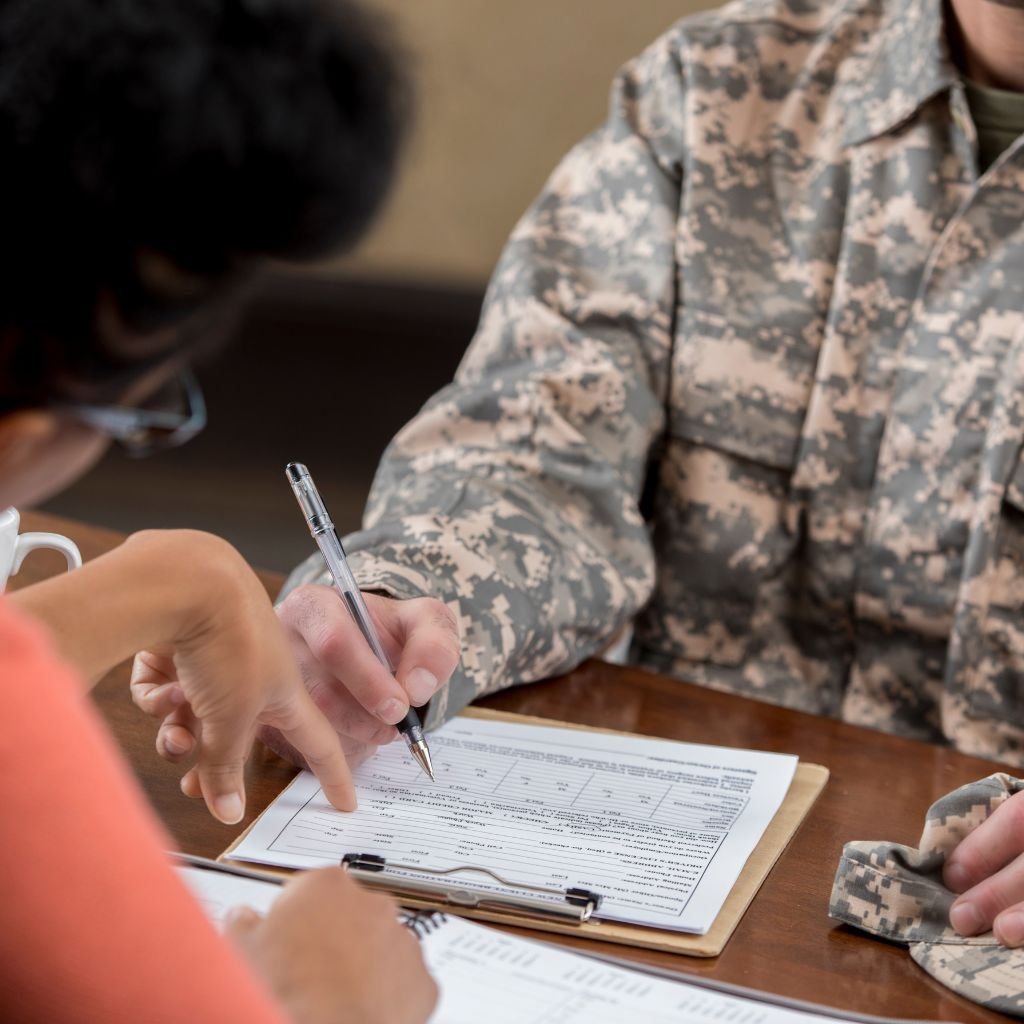
One of the easiest ways to create problems with a military records request is to begin without knowing what information the records custodian will need.
The National Archives uses identifying and military service information to determine which Veteran's record you are requesting and where that record may be located.
Fortunately, you do not need to have every field memorized before you begin.
The current Standard Form 180 specifically instructs requesters to provide as much information as possible and to indicate when information is not available. Missing information can delay a search, but one unknown detail does not automatically make a DD214 request impossible.
What Information Should You Gather Before Requesting a DD214?
For most DD214 requests, try to gather the following information:
The name used during military service, Social Security number when applicable, date and place of birth, branch of service, military component, dates entered and released, service number or DoD identifier when known, and information about the record being requested.
Additional information may be useful depending on the Veteran's circumstances, including last duty stations, retirement status, VA claim information, proof of death, or authorization from the Veteran.
The key is accuracy. Do not invent a service date or number simply because you think every field must contain an answer.
CURRENT FEDERAL REQUEST FORM
The current Standard Form 180, Request Pertaining to Military Records, was revised in June 2026 and lists the information used to locate military personnel records.
View the current Standard Form 180 →1. Name Used During Military Service
Start with the Veteran's complete name as it was used during military service.
The current SF-180 asks for the last name, first name, and full middle name used during service.
This can be especially important when a Veteran later changed their name because of marriage, divorce, adoption, or another legal change.
If the military record was created under a different name, providing only the Veteran's current name may make the search more difficult.
2. Social Security Number
The current SF-180 includes a field for the Veteran's Social Security number.
Social Security numbers became important military personnel identifiers during the period when the armed services transitioned away from separate military service numbers.
When applicable and available, providing the correct Social Security number can help distinguish between Veterans with similar names and other identifying information.
Because a Social Security number is highly sensitive information, it should only be provided through the appropriate secure government records-request process or another service you have intentionally authorized to handle that information.
3. Date and Place of Birth
The current SF-180 asks for both the Veteran's date of birth and place of birth.
These details provide another way for records personnel to distinguish the correct service member from others who may have similar names.
If you are requesting records for a parent or deceased Veteran and do not immediately know the place of birth, family records such as a birth certificate, obituary, old military paperwork, or other official documents may help.
4. Branch of Service
You should identify the branch or branches in which the Veteran served.
This matters because military records are not maintained in one universal repository.
Depending on the period of service, relevant records may be maintained by the National Personnel Records Center, a service personnel command, the Department of Defense, a National Guard organization, or another records custodian.
If you're not sure where the record should be located, read Where Are Military Records Stored? .
5. Active Duty, Reserve, and National Guard Service
The current SF-180 does not simply ask for a branch of service.
It provides separate areas for:
Active service, Reserve service, and National Guard service.
This distinction matters because someone can have more than one type of military service and more than one relevant military record.
For example, a National Guard member may have an NGB Form 22 documenting Guard service and also have a DD214 from a qualifying period of federal active duty.
For more information, read What Is an NGB Form 22? and DD214 vs NGB Form 22 .
6. Dates You Entered and Left Military Service
Service dates are among the most important details used to locate military records.
The SF-180 asks for the date entered and date released for applicable periods of Active, Reserve, and National Guard service.
Exact dates are preferable when you know them.
If you do not remember exact dates, do not fabricate them. Gather the best reliable information available from old orders, personnel documents, VA correspondence, retirement records, military identification documents, or other records.
Separation dates are particularly important because they can help determine which government agency currently maintains the record.
7. Officer or Enlisted Status
The current SF-180 also asks whether the service was performed as an officer or enlisted member.
This is another piece of information that can help identify the correct service record.
If a Veteran served in both statuses during different periods, the request should accurately reflect the applicable service history.
8. Military Service Number
A service number can be particularly useful for Veterans who served during periods when the military used service numbers as primary personnel identifiers.
But you do not need to abandon the request simply because you do not know the service number.
The current June 2026 SF-180 specifically instructs users to write "unknown" when the service number is not known.
That makes the government's own position clear: a missing service number is not automatically fatal to the request.
Our dedicated guide explains what information can still be useful: How to Get a DD214 Without a Service Number .
CURRENT SF-180 GUIDANCE
The June 2026 SF-180 includes fields for service number and DoD ID/EDIPI and specifically tells requesters to enter "unknown" when the service number is unavailable.
Review the current federal form →9. DoD ID or EDIPI Number
The current revision of SF-180 also includes a field for the DoD ID / EDIPI number.
EDIPI refers to the Electronic Data Interchange Personal Identifier associated with a DoD identity record.
This is particularly relevant to more recent military service.
If you know the identifier, provide it. If you do not, continue with the other accurate identifying information available to you rather than assuming the request cannot proceed.
10. Last Duty Stations
The current SF-180 asks the requester to list the Veteran's last duty station or stations.
This information can provide another reference point when personnel records must be identified or reconstructed.
If you remember the installation, unit, ship, base, or other final duty location, include it accurately.
If you do not know it, do not guess merely to fill the field.
11. Whether the Veteran Is Deceased
The SF-180 asks whether the individual whose records are being requested is deceased and, if so, asks for the date of death.
This is particularly important because access rules change after a Veteran dies.
Qualifying next of kin can receive greater access to a deceased Veteran's non-archival military personnel records than the general public.
NARA currently defines qualifying next of kin as an un-remarried surviving spouse, father, mother, son, daughter, sister, or brother.
Next-of-kin requests must include proof of the Veteran's death.
Read How to Get a DD214 for a Deceased Veteran for the complete process.
OFFICIAL NATIONAL ARCHIVES RESOURCE
NARA explains that qualifying next of kin must provide proof of death such as a death certificate, funeral-home documentation, obituary, or another accepted record.
Review National Archives SF-180 guidance →12. Whether the Veteran Retired From Military Service
The current SF-180 asks whether the individual retired from military service.
Retirement status can affect where certain records are maintained and can provide additional context for locating the Veteran's military personnel file.
13. VA Claim or File Number, If Applicable
The June 2026 SF-180 also asks whether the Veteran has filed a claim with VA and, when known, provides a field for the VA claim or file number.
Not every Veteran will have one, and it is not a universal prerequisite for requesting a DD214.
If the Veteran has filed a VA claim and the number is available, providing it can add another useful identifying reference.
14. Which DD214 or Separation Document You Need
You also need to identify what you are actually requesting.
The current SF-180 includes a specific option for:
DD Form 214 or equivalent.
It also asks for the year or years in which the separation form was issued.
This becomes important when a Veteran had multiple periods of active service and may have more than one DD214.
If you are looking for a specific separation period, identify it as accurately as possible.
Deleted vs. Undeleted DD214 Copies
The current SF-180 also distinguishes between deleted and undeleted copies of the DD214.
According to the form, an undeleted copy is ordinarily used when determining benefit eligibility.
If a requester specifically chooses a deleted copy, certain information is removed, including information related to separation authority, reason for separation, reenlistment eligibility, separation codes, and certain character-of-separation information.
The current form states that an undeleted copy will be sent unless a deleted copy is specifically requested.
15. Why You Are Requesting the Record
The current SF-180 includes a section asking for the purpose of the request.
Examples listed on the form include:
Benefits, employment, VA loan programs, medical purposes, genealogy, correction, personal use, or another purpose.
Under the current form, purpose information is required in certain circumstances and can also help the records custodian provide a more appropriate response.
Be specific when the reason matters. For example, an urgent burial request follows different procedures from an ordinary personal-copy request.
16. Your Relationship to the Veteran
If you are requesting records for someone else, you need to identify your relationship to the Veteran.
The SF-180 distinguishes among requesters including:
The Veteran, next of kin of a deceased Veteran, legal guardian, authorized representative, and other requesters.
Your relationship affects how much information can legally be released.
For more information, read Who Can Legally Request a Veteran's Military Records? .
17. Authorization if You Are Helping a Living Veteran
Being the Veteran's spouse, son, daughter, or other relative does not automatically provide unrestricted access to a living Veteran's non-archival military personnel file.
If someone else is requesting records for the Veteran, appropriate authorization may be required.
The current SF-180 states that an authorized representative must submit an authorization letter or power of attorney, as applicable.
The Veteran or authorized legal recipient generally must authorize release of protected non-archival information.
Adult children assisting a parent can read How to Get a DD214 for a Parent .
Spouses should review Can a Spouse Request a DD214? .
18. Proof of Death for a Deceased Veteran
If qualifying next of kin are requesting a deceased Veteran's non-archival records, proof of death is required.
The current SF-180 instructions identify several acceptable examples, including:
A death certificate, obituary or death notice, funeral director's statement, coroner documentation, or DD Form 1300 Casualty Report.
Providing the required documentation with the request can prevent the records custodian from having to seek it later.
19. Where the Records Should Be Sent
The SF-180 requires a complete return address for the person or organization that should receive the records.
The form requests:
Name, street address, apartment or unit when applicable, city, state, ZIP code, daytime phone number, fax number if applicable, and email address.
NARA says NPRC most commonly provides responses electronically when an email address is supplied, or otherwise responds in writing through U.S. Mail.
20. Signature and Date
Do not overlook the signature.
Federal law requires written requests for non-archival federal records and information to be signed and dated within the previous year.
The SF-180 includes an authorization signature where the requester certifies the information provided and authorizes the appropriate release.
Without the required authorization, only limited information may be released from non-archival records.
Archival records follow different rules and generally do not require the Veteran's authorization simply to request the file.
OFFICIAL NATIONAL ARCHIVES RESOURCE
NARA states that written requests for federal non-archival military records must be signed and dated and explains how SF-180 requests should be submitted.
Review official SF-180 submission requirements →What If You Don't Know All of This Information?
Do not assume you cannot request the record.
The current SF-180 specifically tells requesters to provide as much information as possible. Its instructions say that if information cannot be obtained, the requester should indicate that the information is not available.
The consequences of missing information are usually practical: the records search may take longer or become more difficult.
A missing service number, exact duty station, or another single detail does not automatically mean a DD214 cannot be located.
If several important pieces of information are missing, gather what you can from old military paperwork, VA correspondence, retirement documents, family files, photographs, orders, award certificates, tax records, or other reliable sources.
What If the Government Record Itself Is Difficult to Locate?
Sometimes the problem is not missing information from the requester. The military personnel file itself may be difficult to locate.
Older records may require manual searches, and some Army and Air Force personnel files were damaged or destroyed in the 1973 National Personnel Records Center fire.
In those cases, NPRC may use alternate records to reconstruct basic military service information.
Read How to Get a DD214 if Military Records Were Lost if the underlying government file may be the problem.
Where Do You Submit the Information?
Once the information is gathered, the appropriate request method depends on where the Veteran's records are maintained.
Eligible requests can often be submitted through the National Archives' eVetRecs system or through Standard Form 180.
Some more recently separated Veterans may have electronic access through DoD's milConnect system.
For the complete request procedure, read How to Get a DD214 Online .
For broader personnel and service records beyond the DD214, see How to Request Military Service Records .
DD214 Request Checklist
Before starting your request, gather as many of these items as possible:
✓ Name used during military service
✓ Social Security number, when applicable
✓ Date of birth
✓ Place of birth
✓ Branch or branches of service
✓ Active, Reserve, or National Guard component
✓ Date entered military service
✓ Date released from military service
✓ Officer or enlisted status
✓ Military service number, if known
✓ DoD ID / EDIPI, if known
✓ Last duty station or stations, if known
✓ Retirement status
✓ VA claim or file number, if applicable and known
✓ Which DD214 or separation period you need
✓ Purpose of the request when applicable
✓ Requester's relationship to the Veteran
✓ Authorization when requesting for a living Veteran
✓ Proof of death for qualifying next-of-kin requests
✓ Complete delivery address and email
✓ Required signature and date
You may not need every item on this list for every request. The goal is to provide enough accurate information for the appropriate records custodian to identify the Veteran and locate the requested record.
Need Help Preparing Your DD214 Request?
GetMyDD214.com helps Veterans and eligible family members organize the information needed to prepare and route a military records request.
Start My DD214 RequestGetMyDD214.com is a private paid service and is not affiliated with the Department of Veterans Affairs, Department of Defense, or National Archives. Veterans and eligible family members may also request basic non-archival military records directly from the appropriate government agency, generally at no cost.