
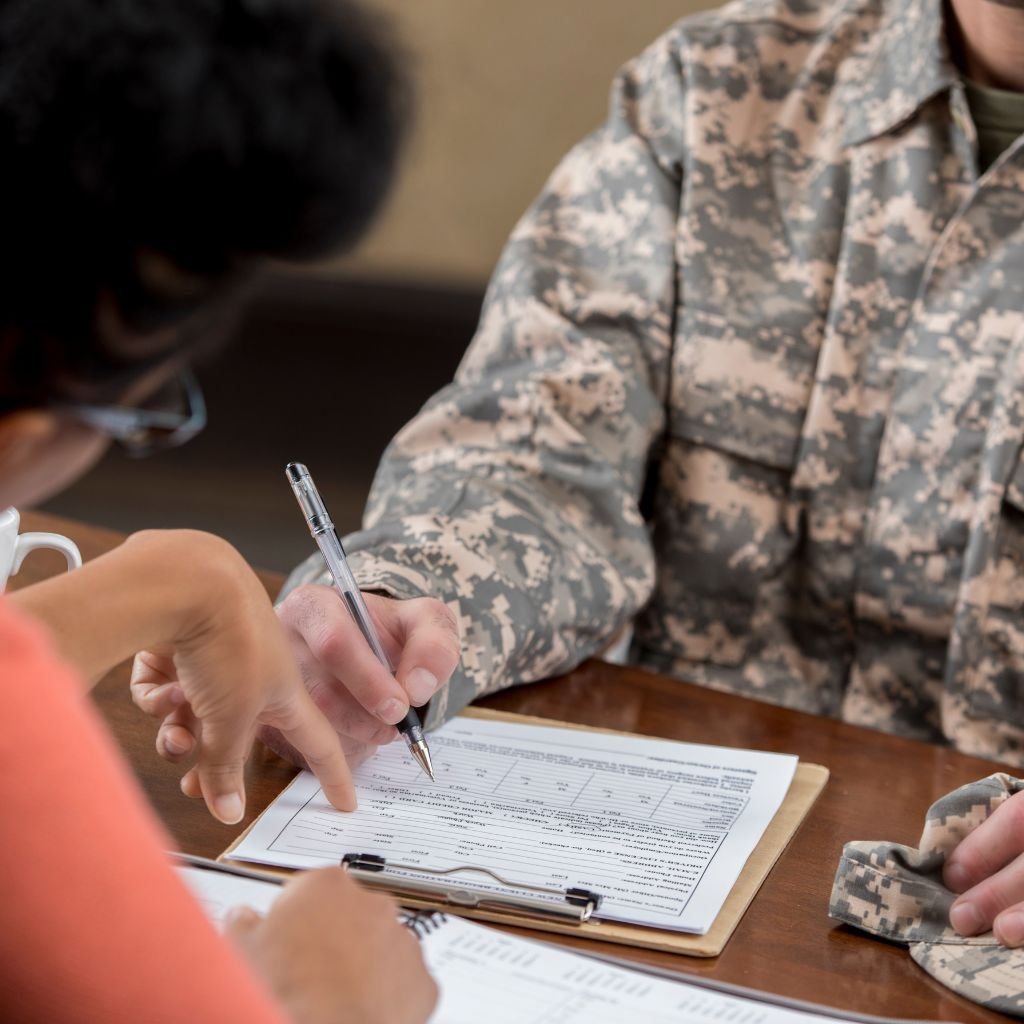
A missing DD214 can mean two very different things.
In the most common situation, the Veteran simply lost their personal copy. The government's military personnel record still exists, and another copy can often be requested.
A more complicated situation occurs when the government personnel file itself was damaged, destroyed, or cannot be located.
That happened on a massive scale during the 1973 fire at the National Personnel Records Center in St. Louis.
Fortunately, the loss of an Official Military Personnel File does not automatically mean there is no longer any way to document the Veteran's service.
NPRC has spent decades collecting auxiliary and organizational records that can be used to reconstruct basic military service information.
First: Did You Lose Your DD214, or Did the Government Lose the Record?
This distinction is important.
If you once had a DD214 but your personal copy was misplaced, damaged, discarded, or destroyed during a move, fire, flood, or other event, that does not mean the government's personnel record is missing.
In that situation, you usually need a normal replacement-record request.
Read How to Replace a Lost DD214 if the problem is simply that you no longer possess your copy.
This guide addresses the harder situation: the underlying government military personnel file may itself be damaged, destroyed, incomplete, or unavailable.
What Happened to Military Records in the 1973 NPRC Fire?
On July 12, 1973, a major fire broke out at the National Personnel Records Center's military personnel records building in St. Louis, Missouri.
The National Archives estimates that approximately:
16 to 18 million Official Military Personnel Files were destroyed.
The fire primarily affected Army and Air Force personnel records.
NARA currently identifies the affected collections as:
Army personnel discharged from November 1, 1912 through January 1,
1960 — approximately 80% of those records were lost.
Air Force personnel discharged from September 25, 1947 through
January 1, 1964, with names alphabetically after Hubbard, James E. —
approximately 75% of those records were lost.
The fire also damaged many records that were not completely destroyed.
OFFICIAL NATIONAL ARCHIVES RESOURCE
The National Archives documents the scope of the 1973 NPRC fire, which military personnel records were affected, and the reconstruction programs created afterward.
Review the official 1973 NPRC fire history →Were All Army and Air Force Records Destroyed?
No.
The fire affected specific personnel collections and time periods.
Even within those affected collections, not every file was necessarily destroyed.
NARA reports that approximately 6.5 million burned and water-damaged records were recovered after the fire.
Some surviving records remain badly damaged and require specialized preservation treatment before they can be safely handled.
That means a Veteran whose service falls within the affected period should not automatically assume their entire personnel file was destroyed.
Is There a List of Every Veteran Whose File Was Destroyed?
No complete list exists.
The National Archives states that:
No duplicate copies of the affected personnel files were maintained, no microfilm copies had been produced, and no complete indexes existed before the fire.
As a result, NARA cannot simply search a master list and tell every Veteran with certainty that a particular OMPF was destroyed.
Instead, NPRC generally determines what survives when a records request is researched.
Can NPRC Reconstruct a Destroyed Military Record?
Often, yes.
After the fire, NPRC developed an extensive records-reconstruction program.
The objective is not necessarily to recreate every page that originally existed in the Veteran's OMPF.
Instead, records specialists attempt to reconstruct the basic military service data needed to document the Veteran's service.
Depending on the available evidence, reconstructed information may establish details such as:
Dates of military service
Character of service
Rank
Unit or organizational information
Duty stations
Overseas service
Hospitalization information
Awards and decorations
Military occupation or specialty
Other basic service information
The amount of information that can be reconstructed depends entirely on which alternate records survive.
OFFICIAL ALTERNATE RECORDS GUIDANCE
NARA explains that NPRC uses alternate military and government record sources to reconstruct basic service information when the original personnel file was damaged or destroyed.
Review alternate military record sources →What Records Can Be Used to Reconstruct Military Service?
NPRC has collected millions of auxiliary and organizational records specifically to help reconstruct military service when original personnel files are unavailable.
Depending on the Veteran and service period, alternate sources can include:
Final pay vouchers
Military hospital and treatment records
VA claims records
Selective Service records
State military records
Unit rosters
Morning reports
Organizational records
Casualty records
Pay records
Military orders
Other records created by military or federal agencies
Each alternate source may contain only part of the Veteran's military history.
Records specialists can combine information from several sources to reconstruct the core service details.
Why Are Final Pay Vouchers Important?
Final Pay Vouchers are one of NPRC's major alternate-record collections.
The National Archives currently reports that its auxiliary holdings include approximately 19 million Final Pay Vouchers.
Those records can contain critical information such as:
The Veteran's name, service number, service dates, and character of service.
Those are among the most important facts needed when reconstructing military service after the loss of the original personnel file.
Can Medical Records Help Reconstruct Service?
Sometimes.
NPRC's auxiliary collections include millions of Army hospital and treatment-facility admission records.
Medical-related records can sometimes help establish that a service member was serving at a particular place and time or provide other identifying service information.
These records do not necessarily recreate the complete personnel file, but they can contribute evidence to a reconstructed service history.
Can Unit Records Be Used?
Yes.
Organizational military records can be especially important when an individual OMPF no longer exists.
Unit rosters, morning reports, and other organizational records may contain information showing:
The Veteran's presence in a unit, personnel changes, assignments, transfers, hospitalization, absence, or other service events.
These records are one reason destruction of an individual personnel file does not necessarily erase every federal record associated with the Veteran.
OFFICIAL NPRC AUXILIARY RECORDS RESOURCE
NARA describes the auxiliary and organizational collections used to reconstruct military service, including Final Pay Vouchers, hospital-admission records, unit records, and other sources.
Explore NPRC auxiliary record holdings →Will NPRC Recreate the Original DD214?
Not necessarily.
Records reconstruction is intended to document military service using whatever authoritative evidence remains.
If an original separation document survives, NPRC may be able to provide a copy.
If it does not survive, NPRC may instead reconstruct the Veteran's basic service and provide official certification based on the available records.
NARA has historically used NA Form 13038, Certification of Military Service, when reconstructing service for Veterans whose original personnel records were destroyed.
The resulting documentation may be used to establish military service even though it is not a photocopy of the original DD214.
Can Reconstructed Service Be Used Instead of a DD214?
In many circumstances, official reconstructed military-service documentation can provide the proof needed when an original separation document no longer exists.
NARA has specifically described Certification of Military Service documentation produced through records reconstruction as a document that can be used in lieu of the missing DD214 to establish military service for benefits.
However, the agency or organization requesting proof ultimately determines which documentation it will accept.
If you need alternatives to a DD214, read How to Prove Military Service Without a DD214 .
How to Request a DD214 When the Record May Have Been Destroyed
Start the request normally through the appropriate military-record system.
For many former service members whose records are maintained or serviced through NPRC, that means using:
eVetRecs, or
Standard Form 180.
Do not assume you must personally reconstruct the record before submitting the request.
NPRC personnel determine what surviving and alternate federal records are available.
Step 1: Gather as Much Personal Information as Possible
Accurate identifying information becomes especially important when the original personnel file may have been destroyed.
NARA currently asks for:
The Veteran's complete name used during service
Service number
Social Security number
Branch of service
Dates of service
Date of birth
Place of birth
If you do not know the service number, date and place of birth are especially helpful.
Read How to Get a DD214 Without a Service Number if that information is unavailable.
Step 2: Include Fire-Specific Information
If you believe the personnel record falls within the collections affected by the 1973 fire, NARA specifically asks requesters to provide additional information when known.
That includes:
Place of discharge
Last unit of assignment
Place of entry into military service
These details can help records specialists identify which auxiliary and organizational sources should be searched.
Old personal papers can therefore be extremely useful in a fire-related request.
CURRENT NARA REQUEST GUIDANCE
NARA specifically asks requesters who believe a record may have been involved in the 1973 fire to provide the place of discharge, last unit of assignment, and place of entry into service when known.
Review current DD214 request requirements →Step 3: Search Your Own Old Papers Before Submitting
NARA strongly encourages requesters dealing with fire-related records to collect as much information as possible from old personal papers before submitting the request.
Useful documents might include:
Old military orders
Pay documents
Award certificates
Military correspondence
VA paperwork
Photographs
Discharge paperwork
Unit information
Retirement paperwork
Old identification documents
Letters written during service
You do not need to reconstruct the military career yourself.
The purpose of gathering these documents is to give NPRC more accurate information about where to search.
Step 4: Submit the Request Through eVetRecs
If NPRC is the appropriate records source, Veterans and qualifying next of kin can begin a request through eVetRecs.
The current online system requires identity verification through ID.me.
During the request:
Identify the Veteran;
provide all known service information;
request the DD214 or equivalent separation document; and
use the available comments or request information to provide useful
fire-related details.
For the full online process, read How to Get a DD214 Online .
Step 5: Use Standard Form 180 if Appropriate
A military-record request can also be submitted using Standard Form 180, Request Pertaining to Military Records.
Provide every reliable identifying detail available.
If the request may involve fire-related reconstruction, include the additional service details that can help NPRC research alternate records.
The current SF-180 also includes a Records Location Table because not every military personnel record is maintained by NPRC.
OFFICIAL STANDARD FORM 180 RESOURCE
NARA's current SF-180 guidance specifically explains that alternate sources can often reconstruct service for fire-related records and notes that those searches may require additional time.
Review Standard Form 180 instructions →What If the Veteran's File Was Only Partially Damaged?
NPRC recovered millions of personnel files that survived the 1973 fire in damaged condition.
These are often referred to as burned files or B-files.
Some contain surviving documents that can still be read after preservation treatment.
Records specialists may combine information from the surviving portions of the file with auxiliary records to provide the most complete response available.
A partially damaged personnel file can therefore produce more information than a file that was completely destroyed.
Can Every Lost Personnel File Be Fully Reconstructed?
No.
Reconstruction has limitations.
Alternate record sources usually contain specific pieces of military information rather than complete copies of the original OMPF.
NPRC may be able to reconstruct enough information to document the Veteran's basic service while still being unable to reproduce every assignment, evaluation, order, award record, medical entry, or administrative document that once existed.
A reconstructed service record should therefore not be confused with a complete recreation of the destroyed personnel file.
What If NPRC Has to Contact Another Agency?
Reconstruction may take longer.
NARA currently explains that some fire-related requests can be reconstructed promptly using alternate records already held at NPRC.
In other cases, NPRC must request information from external agencies before it can complete the reconstruction.
When that happens, processing can take substantially longer than a routine DD214 request.
If you already submitted a request and it has been pending, read Why Is My DD214 Taking So Long? .
How Long Does Fire-Related Records Reconstruction Take?
There is no universal processing time.
Some records can be reconstructed relatively quickly when NPRC already has the necessary alternate documents.
Other cases can take longer because staff must:
Search multiple auxiliary collections;
examine damaged original records;
identify unit or organizational records;
contact another government agency; or
reconcile information from several sources.
NARA explicitly warns that requests requiring reconstruction can take longer to complete.
For broader timing information, see How Long Does It Take to Get a DD214? .
What If You're Requesting Records for a Deceased Veteran?
Qualifying next of kin can request non-archival military personnel records for a deceased Veteran.
NARA currently defines next of kin for military-personnel-record access as:
An un-remarried surviving spouse, father, mother, son, daughter, sister, or brother.
The request must include proof that the Veteran has died.
Acceptable proof can include:
A death certificate, funeral-home letter, or published obituary.
If the Veteran's record was also affected by the 1973 fire, provide as much known military information as possible.
Read How to Get a DD214 for a Deceased Veteran for the complete family-request process.
What If the Record Is Needed for an Urgent Funeral?
Do not rely on a normal records-reconstruction timeline when a funeral is imminent.
NARA provides an emergency military-record request procedure.
If the Veteran will be buried in a VA national cemetery, the National Cemetery Scheduling Office can work directly with NPRC to obtain military-service information needed to determine burial eligibility.
If the burial is not in a VA national cemetery, qualifying next of kin can use NARA's emergency SF-180 procedure.
Importantly, NARA states that even fire-related records can sometimes be reconstructed promptly when the necessary alternate records are readily available.
At other times, outside-agency research is necessary and the process can take longer.
OFFICIAL EMERGENCY RECORDS GUIDANCE
NARA provides priority procedures for urgent military-record needs and explains how fire-related records may be reconstructed from alternate sources.
Review emergency military-record procedures →What If the DD214 Is Needed for VA Benefits?
Do not automatically delay a VA benefits application simply because an original DD214 is unavailable.
VA currently states that when it receives an application for VA benefits, VA will request the Veteran's DD214 as part of the application process.
If the underlying personnel file was affected by the NPRC fire, federal records specialists may need to rely on reconstructed or alternate service information.
Veterans should provide VA with whatever relevant service evidence they possess, but they generally should not assume they must personally obtain a replacement DD214 from NARA before applying.
Read Why You Need a DD214 for VA Benefits .
What If You Need Proof of Service for Something Other Than VA?
An employer, lender, cemetery, state agency, Veterans organization, or other program may ask for military-service documentation.
If the original DD214 no longer exists, ask the organization what other official military documentation it will accept.
Depending on the situation, acceptable alternatives may include:
Certification of Military Service
Another separation document
Reconstructed service documentation
NGB Form 22
Personnel records
Retirement records
Other official military records
The organization requesting proof determines which substitute records satisfy its requirements.
What If the Veteran Served Before the DD214 Existed?
Do not assume every older Veteran should have had a document literally called a DD214.
The DD214 became the standard separation form in the modern era.
Before January 1, 1950, the military services used several predecessor forms, including:
WD AGO 53
WD AGO 55
WD AGO 53-55
NAVPERS 553
NAVMC 78PD
NAVCG 553
Some Veterans whose records were affected by the NPRC fire therefore would originally have received one of these older separation documents rather than a DD214.
If you are unsure whether a DD214 was ever issued, read What Happens If I Never Received My DD214? .
What If the Veteran Was in the National Guard?
National Guard service can involve different record systems.
A former Guard member may have:
An NGB Form 22 documenting Guard separation;
retirement-points records;
state National Guard records; and
one or more DD214s documenting qualifying periods of active service.
National Guard records are not all maintained at NPRC.
If the record you actually need is an NGB separation document, start with What Is an NGB Form 22? .
For the distinction between the records, read DD214 vs NGB Form 22 .
What If the Record Is Missing but Was Not Part of the 1973 Fire?
Not every difficult-to-locate military record is a fire-related record.
A record may appear missing because:
The request was sent to the wrong records custodian;
the Veteran's service information was incomplete;
the file is maintained by a military personnel command;
the member is still in a Reserve or Guard status;
the document requested was never issued for that period of service;
or
the record is maintained in another federal or state records system.
Before concluding that a record was destroyed, determine where the record should actually be stored.
Read Where Are Military Records Stored? .
How Do You Know Whether Your Record Was in the Fire?
Start with the Veteran's branch and separation date.
The two major affected groups were:
Army — discharged November 1, 1912 through January 1, 1960.
Air Force — discharged September 25, 1947 through January 1, 1964,
particularly names alphabetically after Hubbard, James E.
Falling within those groups means the file may have been affected.
It does not prove the entire personnel record was destroyed.
NPRC must research the particular Veteran's record to determine what survives and what can be reconstructed.
What Should You Avoid Doing?
There are several mistakes that can make an already complicated search harder.
Do not assume the record is permanently gone simply because the
Veteran falls within the 1973-fire period.
Do not fabricate a service number, exact service date, unit, or other
identifying information.
Do not repeatedly submit duplicate requests when an existing NPRC
request is already being processed.
Do not assume that paying for express shipping makes NPRC process the
record faster.
Do not assume a reconstructed record will reproduce every page of the
original personnel file.
Provide the best accurate information available and allow the records specialists to determine which sources can document the service.
Can Express Shipping Speed Up a Fire-Related Request?
No.
NARA specifically states that Priority Mail, FedEx, UPS, and other express-delivery services can make a paper request arrive at NPRC sooner, but they do not cause the record to be processed faster.
A reconstruction request still requires whatever research is necessary to establish the Veteran's service.
Genuine emergencies should be handled through NARA's official emergency procedure.
Can a Private Company Reconstruct a Destroyed Federal Record?
A private records-request service does not control NPRC's federal auxiliary records or official reconstruction process.
Private assistance can help:
Organize the Veteran's known information;
prepare a records request;
identify likely record custodians;
explain missing information; and
reduce avoidable submission errors.
But only the appropriate government agency can determine what official federal military records survive and what can be reconstructed from government holdings.
Lost Military Records Checklist
If you believe the underlying military personnel record may have been lost or destroyed, gather as much of the following as possible:
✓ Veteran's complete name used during service
✓ Branch of service
✓ Approximate or exact service dates
✓ Service number, if known
✓ Social Security number, when applicable
✓ Date of birth
✓ Place of birth
✓ Place of entry into military service
✓ Place of discharge
✓ Last unit of assignment
✓ Last known duty station
✓ Existing military orders
✓ Awards or citations
✓ VA correspondence
✓ Pay or retirement documents
✓ Any surviving separation paperwork
✓ Proof of death for qualifying next-of-kin requests
You do not need every item for NPRC to begin a search.
The purpose is to give records specialists as many reliable clues as possible when determining which alternate sources may contain service information.
How to Get a DD214 if Military Records Were Lost: The Short Answer
If the government's military personnel file was damaged or destroyed, it may still be possible to document the Veteran's service.
The National Personnel Records Center has decades of experience reconstructing military service from alternate records.
The basic process is:
1. Determine whether the problem is a lost personal DD214 or a
missing government personnel file.
2. Check whether the Veteran's branch and separation date fall within
the collections affected by the 1973 NPRC fire.
3. Gather as much accurate identifying and service information as
possible.
4. For fire-related records, include the place of discharge, last
unit of assignment, and place of entry into military service when
known.
5. Submit the appropriate request through eVetRecs or Standard Form
180 when NPRC is the correct records source.
6. Allow NPRC to search surviving personnel documents, auxiliary
records, organizational records, and information held by other
agencies when necessary.
7. Understand that reconstructed service documentation may establish
the Veteran's military service even when the original DD214 or OMPF
cannot be reproduced.
A destroyed personnel file is a serious records problem, but it does not automatically erase the Veteran's documented military service.
Need Help Preparing a Military Records Request?
GetMyDD214.com helps Veterans and eligible family members organize available service information and prepare military-record requests, including situations where older records may be difficult to locate.
Start My DD214 RequestGetMyDD214.com is a private paid records-request assistance service and is not affiliated with the Department of Veterans Affairs, Department of Defense, or National Archives. We do not control NPRC records reconstruction or federal processing times. Veterans and eligible family members may request basic non-archival military records directly from the appropriate government agency, generally at no cost.